

When it comes to the relationship between bosses and employees, there’s typically a clear line between personal and professional relationships. In other words, colleagues usually keep things strictly business and don’t socialize outside of work.
There are cases where employees and managers develop friendships over time. While this isn’t super common, it does happen. It’s worth noting that when your boss becomes your friend, things can get a little tricky.
The boundaries between your personal and professional lives may start to blur, and it can be tough to maintain a professional demeanour while also nurturing a friendship.
On the one hand, having a close relationship with your boss can lead to greater job satisfaction and a more supportive work environment. But on the other hand, it can also create conflicts of interest and favouritism.
So while it can be great to be friends with your boss, it’s important to be aware of the potential downsides and approach the situation cautiously.
Exploring when your boss becomes your friend quotes can provide valuable insights and perspectives on effectively managing this unique and often complex relationship.
When Your Boss Becomes Your Friend Quotes
1. When your boss becomes your friend, the boundaries between work and personal life start to blur, and you may find yourself sharing more than you intended.
2. A boss-friend relationship can be both rewarding and challenging, requiring you to navigate complex power dynamics and maintain professional decorum.
3. The line between friend and boss can be thin, and it’s important to strike the right balance between familiarity and respect.
4. When your boss becomes your friend, it can be easy to forget that they hold a position of authority over you, which can lead to misunderstandings and conflict.
5. Having a boss who is also a friend can be a double-edged sword, offering both opportunities for personal connection and risks for professional fallout.
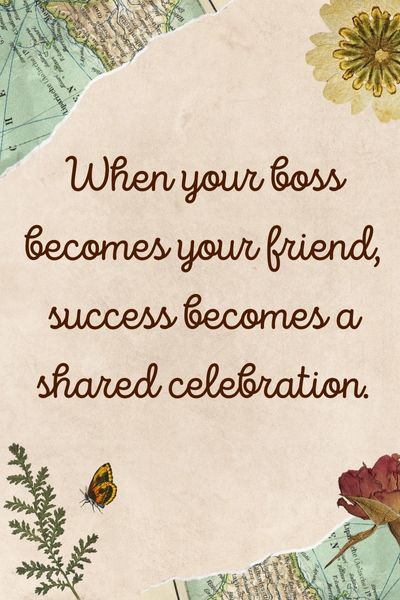
6. A boss-friend relationship can be a delicate dance, requiring you to be mindful of your words and actions and aware of the potential consequences.
7. When your boss becomes your friend, you may find yourself caught in a web of conflicting loyalties, torn between personal allegiances and professional obligations.
8. A boss-friend relationship can be a powerful force for good, offering both emotional support and practical advice on navigating the challenges of work and life.
9. The dynamics of a boss-friend relationship can be tricky to navigate, requiring you to be attuned to your own emotions and those of your friend/boss.
10. When your boss becomes your friend, it can be tempting to use your personal relationship to gain an advantage at work, but this can backfire and damage your friendship and career.

11. A boss-friend relationship can be both a blessing and a curse, offering both the benefits of camaraderie and the risks of betrayal and disappointment.
12. The key to a successful boss-friend relationship is maintaining a balance of respect and empathy while being mindful of the power dynamics at play.
13. When your boss becomes your friend, you may find yourself caught between conflicting loyalties, trying to balance your personal and professional interests.
14. A boss-friend relationship can offer a unique perspective on work and life, allowing you to see your boss as a human being with their own hopes and fears.
15. The challenges of a boss-friend relationship require you to be resilient and adaptable and to cultivate a sense of trust and mutual understanding.

16. When your boss becomes your friend, it’s important to remember that they are still your boss and to treat them with the same level of respect and professionalism as you would any other superior.
17. A boss-friend relationship can be a powerful tool for personal and professional growth, offering both support and constructive feedback to help you reach your goals.
18. The dynamics of a boss-friend relationship can be unpredictable and ever-changing, requiring you to be flexible and open-minded in your approach.
19. Building a strong, supportive network of colleagues who share your values and vision can be a wonderful opportunity when your boss becomes your friend.
20. A boss-friend relationship requires you to be honest, transparent, and accountable and maintain high integrity and professionalism.

21. When your boss becomes your friend, you gain a trusted ally who can provide valuable guidance and support in your personal and professional life.
22. Having a boss who is also a friend can create a sense of camaraderie and belong in the workplace, fostering a positive and productive work environment.
23. A boss-friend relationship can provide a unique opportunity to gain insights into the company’s inner workings and better understand the challenges and opportunities ahead.
24. When your boss becomes your friend, you may find it easier to communicate your ideas and concerns and to work collaboratively towards shared goals.
25. A boss-friend relationship can offer a sense of security and stability, providing a buffer against workplace politics and uncertainty.

26. Having a boss who is also a friend can help you build a strong support network in the workplace, enabling you to develop deeper connections with your colleagues and peers.
27. A boss-friend relationship can provide a valuable sounding board for your ideas and goals, helping you to refine your vision and hone your skills.
28. When your boss becomes your friend, you gain a sense of personal investment in the success of the company, motivating you to work harder and achieve more.
29. Having a boss who is also a friend can help you navigate the complexities of workplace relationships, offering a safe and supportive space to discuss any challenges or conflicts that may arise.
30. A boss-friend relationship can be a source of inspiration and motivation, encouraging you to reach for your dreams and pursue your passions.
31. When your boss becomes your friend, you may find it easier to negotiate for what you want and need, whether it’s a raise, a promotion, or a more flexible schedule.
32. Having a boss who is also a friend can help you develop a stronger sense of empathy and understanding for your boss and the wider team.
33. A boss-friend relationship can offer a sense of belonging and community in the workplace, helping you to feel more connected and engaged with your job.
34. When your boss becomes your friend, you may find giving and receiving feedback easier, helping you grow and develop personally and professionally.
35. Having a boss who is also a friend can help you maintain a better work-life balance, enabling you to find time for the things that matter most to you.
36. A boss-friend relationship can provide a sense of security and stability, offering reliable support and guidance in the face of adversity.
37. When your boss becomes your friend, you may find it easier to take risks and pursue your goals, knowing you have a trusted ally.
38. Having a boss who is also a friend can help you develop a stronger sense of loyalty and commitment to the company, fostering a culture of collaboration and cooperation.
39. A boss-friend relationship can help you develop new skills and insights, exposing you to new ideas and perspectives that can help you grow and develop personally and professionally.
40. When your boss becomes your friend, you may find navigating the complexities of office politics easier, building stronger relationships and working more effectively with your colleagues and peers.
41. The boss-friend relationship is a delicate balance of power and trust, requiring both parties to navigate the complexities of the workplace with care and respect.
42. When your boss becomes your friend, you may find yourself caught between competing loyalties, trying to balance your personal and professional obligations with grace and tact.
43. The boss-friend relationship can be a source of comfort and support, but it can also be fraught with tension and conflict, requiring careful attention and communication to maintain a healthy balance.
44. When your boss becomes your friend, you may find yourself struggling to maintain professional boundaries, blurring the lines between work and play in a way that can be both exhilarating and challenging.
45. The boss-friend relationship can be a double-edged sword, offering both the benefits of friendship and the risks of an uneven power dynamic that can create friction and tension in the workplace.
46. When your boss becomes your friend, you may find yourself navigating a complex web of relationships, trying to balance your loyalty to your boss with your obligations to your colleagues and peers.
47. The boss-friend relationship can be a source of strength and resilience in the face of workplace challenges, but it can also create a sense of isolation and disconnection from your colleagues and the wider team.
48. When your boss becomes your friend, you may find yourself struggling to maintain a sense of objectivity and professionalism as the lines between personal and professional relationships become increasingly blurred.
49. The boss-friend relationship can be a source of inspiration and motivation, but it can also create a sense of pressure and expectation that can be difficult to manage.
50. When your boss becomes your friend, you may find yourself walking a tightrope between loyalty and honesty, trying to balance your desire to support your boss with your obligation to provide candid feedback and constructive criticism.
51. The boss-friend relationship can be a complex and nuanced dance, requiring both parties to be attuned to the needs and expectations of the other in order to maintain a healthy and productive relationship.
52. When your boss becomes your friend, you may struggle to maintain a sense of perspective as your relationship’s personal and professional aspects become increasingly intertwined.
53. The boss-friend relationship can be a source of creativity and innovation, but it can also create a sense of pressure and expectation that can stifle your creativity and limit your ability to take risks.
54. When your boss becomes your friend, you may find yourself navigating a complex power dynamic, trying to balance your own ambitions and goals with the needs and expectations of your boss.
55. The boss-friend relationship can be a source of joy and fulfilment, but it can also create a sense of anxiety and uncertainty as you navigate the ups and downs of the workplace alongside your friend and boss.
56. When your boss becomes your friend, you may find yourself struggling to maintain a sense of boundaries and professionalism as the emotional connections of friendship collide with the demands of the workplace.
57. The boss-friend relationship can be a source of learning and growth, but it can also create a sense of stagnation and complacency as you become too comfortable with your boss and fail to challenge yourself and grow.
58. When your boss becomes your friend, you may find yourself navigating a complex terrain of expectations and obligations, balancing your needs and desires with those of your boss and the wider team.
59. The boss-friend relationship can be a source of strength and resilience, but it can also create a sense of vulnerability and insecurity as you open yourself up to the risks and challenges of the workplace alongside your friend and boss.
60. When your boss becomes your friend, you may find yourself struggling to balance your own needs and goals with those of your boss, as the dynamics
61. The boss-friend relationship is a unique and complex dynamic, requiring both parties to navigate the intricacies of the workplace with care and consideration.
62. When your boss becomes your friend, the boundaries between personal and professional relationships can blur, creating ambiguity and uncertainty.
63. The boss-friend relationship requires a delicate balance of power and trust, with both parties needing to respect each other’s roles and responsibilities in the workplace.
64. When your boss becomes your friend, you may find yourself walking a tightrope between loyalty and honesty, trying to balance your desire to support your boss with your obligation to provide candid feedback and constructive criticism.
65. The boss-friend relationship can be a source of comfort and support, but it can also create a sense of isolation and disconnection from your colleagues and peers.
66. When your boss becomes your friend, you may find yourself navigating a complex web of relationships, trying to balance your loyalty to your boss with your obligations to your colleagues and peers.
67. The boss-friend relationship can be rewarding and challenging, with both parties needing to communicate clearly and honestly to maintain a healthy and productive relationship.
68. When your boss becomes your friend, you may find yourself struggling to maintain professional boundaries as the emotional connections of friendship collide with the demands of the workplace.
69. The boss-friend relationship requires a high degree of emotional intelligence and maturity, with both parties needing to be attuned to each other’s needs and expectations.
70. When your boss becomes your friend, you may find yourself navigating a complex power dynamic, with both parties needing to respect each other’s authority and expertise.
71. The boss-friend relationship can be a source of inspiration and motivation, but it can also create a sense of pressure and expectation that can be difficult to manage.
72. When your boss becomes your friend, you may find yourself struggling to balance your personal and professional obligations as the lines between work and play become increasingly blurred.
73. The boss-friend relationship requires a great deal of trust and mutual respect, with both parties needing to be honest and transparent in their communications.
74. When your boss becomes your friend, you may find yourself experiencing conflicting emotions as the personal and professional aspects of your relationship intersect unexpectedly.
75. The boss-friend relationship can be a source of joy and fulfilment, but it can also create a sense of anxiety and uncertainty as you navigate the ups and downs of the workplace alongside your friend and boss.
76. When your boss becomes your friend, you may find yourself struggling to maintain a sense of objectivity and professionalism, as the emotional connections of friendship can cloud your judgment.
77. The boss-friend relationship requires a high degree of empathy and understanding, with both parties needing to be sensitive to each other’s perspectives and needs.
78. When your boss becomes your friend, you may find yourself experiencing a heightened sense of responsibility as the success of your friend and the boss becomes intertwined with your own.
79. The boss-friend relationship can be supportive and challenging, with both parties needing to be open and flexible in their communications and interactions.
80. When your boss becomes your friend, you may find yourself navigating a complex and nuanced dynamic, requiring you to balance your own needs and desires with those of your boss and the wider team.
81. When your boss becomes your friend, it can be difficult to maintain the necessary professional boundaries that keep the workplace functioning effectively.
82. The boss-friend relationship can create a conflict of interest, as your loyalty to your friend may compete with your obligations to colleagues and the wider organization.
83. When your boss becomes your friend, managing your emotions and maintaining an objective perspective on workplace issues can be challenging.
84. The boss-friend relationship requires a high degree of trust and discretion, as personal conversations and interactions can have implications for the workplace and wider team.
85. When your boss becomes your friend, it can be challenging to separate personal and professional priorities and to ensure that workplace needs remain paramount.
86. The boss-friend relationship can create a sense of pressure to perform and succeed, as the success of your friend and the boss becomes closely tied to your own.
87. When your boss becomes your friend, it can be difficult to navigate the potential conflicts of interest that arise, such as competing for promotions or resources.
88. The boss-friend relationship can create a sense of unease and discomfort among other colleagues, who may feel excluded or disadvantaged by the friendship.
89. When your boss becomes your friend, it can be challenging to maintain a sense of objectivity and impartiality, particularly when dealing with sensitive or controversial issues.
90. The boss-friend relationship requires a great deal of emotional maturity and intelligence as you navigate the complex emotions and dynamics of the workplace alongside your friend and boss.
91. When your boss becomes your friend, balancing being supportive and critical can be challenging, particularly when giving feedback or managing performance.
92. The boss-friend relationship can create a sense of isolation and disconnection from your other colleagues as you prioritize your friendship with your boss over your wider professional relationships.
93. When your boss becomes your friend, it can be difficult to navigate changes in your friend’s role or status within the organization, particularly if it affects your own prospects or career progression.
94. The boss-friend relationship can create a sense of pressure to maintain a positive and harmonious workplace, even in the face of conflict or disagreement.
95. When your boss becomes your friend, it can be challenging to manage your own expectations and desires, particularly if they conflict with the needs of the wider organization or team.
96. The boss-friend relationship requires a high degree of self-awareness and emotional regulation as you navigate the complex emotions and pressures of the workplace and your friendship.
97. When your boss becomes your friend, it can be difficult to separate your personal feelings and emotions from your professional responsibilities, particularly in times of stress or crisis.
98. The boss-friend relationship can create a sense of confusion and ambiguity around your role and responsibilities within the workplace, particularly if your friend is your direct supervisor.
99. When your boss becomes your friend, it can be challenging to maintain the necessary level of professionalism and decorum, particularly in social situations outside of the workplace.
100. The boss-friend relationship requires a great deal of maturity and tact as you navigate the workplace’s complex social and professional dynamics and your friendship.
101. The psychological factors that influence the development of a boss-friend relationship are complex and multifaceted, including elements such as trust, communication, and emotional regulation.
102. The maintenance of a boss-friend relationship relies heavily on psychological factors such as mutual respect, empathy, and a shared sense of purpose and values.
103. The psychological dynamics of a boss-friend relationship can be shaped by a range of factors, including personality traits, life experiences, and social context.
104. The development of a boss-friend relationship can be influenced by psychological factors such as shared interests, common goals, and a sense of mutual support and understanding.
105. The psychological factors underpinning a successful boss-friend relationship include emotional intelligence, self-awareness, and effective communication skills.
106. The maintenance of a boss-friend relationship requires a high degree of psychological flexibility and adaptability as both parties navigate the challenges and complexities of the workplace and their friendship.
107. The psychological factors that influence a boss-friend relationship’s success include authenticity, vulnerability, and a willingness to take risks and embrace change.
108. The psychological dynamics of a boss-friend relationship can be shaped by a range of individual and contextual factors, including cultural differences, power imbalances, and personal insecurities.
109. Developing and maintaining a boss-friend relationship requires high emotional resilience and coping skills as both parties navigate the highs and lows of their shared experiences.
110. The psychological factors that shape a boss-friend relationship can be influenced by the social and cultural norms of the workplace, as well as broader societal factors such as gender, race, and class.
111. A boss-friend relationship’s success depends on a range of psychological factors, including trust, honesty, and a shared commitment to mutual growth and development.
112. The psychological dynamics of a boss-friend relationship can be shaped by factors such as attachment style, emotional regulation, and the ability to empathize with others.
113. The psychological factors underpinning a successful boss-friend relationship include effective conflict resolution skills, the ability to compromise, and a willingness to forgive and move forward.
114. The psychological dynamics of a boss-friend relationship can be influenced by the level of social support and encouragement provided by colleagues and other members of the workplace community.
115. The psychological factors that shape the development and maintenance of a boss-friend relationship are often shaped by external factors such as economic pressures, organizational culture, and changes in the wider social and political landscape.
116. The psychological factors that influence a boss-friend relationship’s success include emotional stability, self-confidence, and the ability to set and maintain clear boundaries.
117. The maintenance of a boss-friend relationship requires a high degree of psychological awareness and self-reflection, as both parties seek to understand their own and each other’s emotional needs and priorities.
118. The psychological dynamics of a boss-friend relationship can be influenced by factors such as personality clashes, differences in communication style, and conflicts over professional or personal goals.
119. The success of a boss-friend relationship depends on both parties ability to navigate the complexities of the workplace and their friendship while maintaining a healthy and productive work-life balance.
I believe these, when your boss becomes your friend quotes have been helpful to you. Kindly share with others and leave a comment in the comment section. Thanks.